
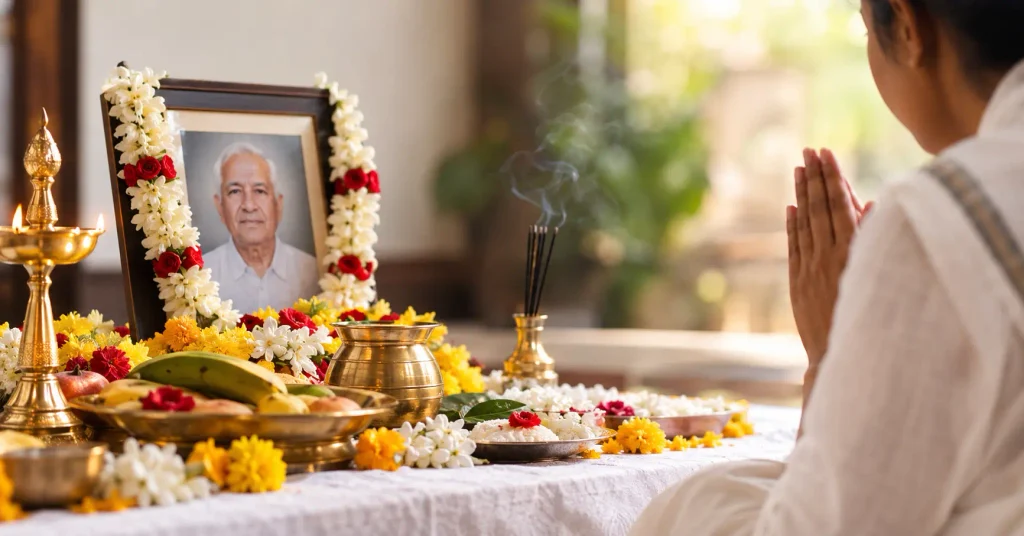
The 13th day ceremony after death is commonly known as the Tehravin (Tehrvi) or Terahvin ceremony in many Hindu families. It is a traditional ceremony held on the thirteenth day after a person’s death. The ceremony is generally performed to offer prayers for the departed soul and to mark the end of an important period of mourning for the family.
The name and customs can vary depending on the family’s traditions, region, caste, and religious practices. In some communities, the ceremony may be referred to by a different name or may be performed with different rituals.
What Is the 13th Day Ceremony Called?
The 13th day ceremony is commonly called Tehravin, Tehrvi, or Terahvin. The word refers to the thirteenth day following death.
For many Hindu families, this day has religious and emotional significance. Relatives and close family members may come together for prayers, rituals, remembrance, and a meal offered to guests.
The purpose is not exactly the same in every family. Some families focus mainly on religious rituals, while others also use the occasion to gather relatives and formally conclude the mourning period.
Why Is the 13th Day Ceremony Performed?
The customs surrounding death and mourning differ across Hindu traditions, but the thirteenth day is important in many communities.
The ceremony may include prayers, offerings, remembrance of the deceased, and rituals performed with the guidance of a priest. Families may also invite relatives, friends, and members of their community.
For the family, the day can provide an opportunity to come together after the funeral and remember the person who has passed away.
It is important to understand that there is no single set of rituals followed by every Hindu family. Practices can differ according to regional and family traditions.
What Happens During the Tehravin Ceremony?
The exact rituals depend on the family’s customs and the priest conducting the ceremony. Common activities may include:
- Prayer and religious rituals
- Offerings made as part of the ceremony
- Pind or other traditional rites, where applicable
- Recitation of religious texts or mantras
- Remembering and honouring the deceased
- A meal or community gathering
- Giving food or donations according to family tradition
Some families may keep the ceremony simple, while others arrange a larger gathering with extended relatives and community members.
If you are arranging a Tehravin ceremony, it is best to discuss the required rituals with a priest or knowledgeable family elder who understands your specific tradition.
Is the 13th Day Ceremony the Same as Shraddha?
Shraddha is a broader term used for Hindu rituals and offerings performed in remembrance of deceased ancestors. Depending on the family’s tradition, Shraddha-related rituals may be performed at different times.
The Tehravin or Tehrvi specifically refers to the ceremony associated with the thirteenth day after death in traditions where this observance is followed.
The two terms can sometimes be used together because certain families perform Shraddha-related rituals during the thirteenth-day ceremony. However, the exact practice varies.
How Long Does the 13th Day Ceremony Take?
There is no fixed duration for every Tehravin ceremony.
The time can depend on the rituals being performed, the priest’s instructions, the number of family members attending, and whether a meal or other arrangements are included.
Some ceremonies may take only a few hours, while larger gatherings can take longer.
Families should confirm the schedule with the priest beforehand so that everyone knows when to arrive and what needs to be arranged.
What Should Families Arrange for the Ceremony?
Planning a ceremony after a death can be difficult because the family is still dealing with grief. Depending on the family’s requirements, arrangements may include:
- Priest or pandit
- Prayer and ritual materials
- Seating arrangements
- Food for relatives and guests
- Flowers and other traditional items
- Venue or home arrangements
- Transportation for family members
- Required religious materials
The requirements are different for every family, so it is useful to prepare a simple checklist before the ceremony.
Related Funeral Services
If you need help with funeral arrangements or related services, Last Yatra can assist you with the necessary arrangements.
Visit Us:
For more information or assistance, contact Last Yatra to discuss your requirements
Frequently Asked Questions
What is the 13th day ceremony after death called?
The 13th day ceremony after death is commonly called Tehravin, Tehrvi, or Terahvin in many Hindu traditions.
Why is the 13th day important after death?
For many Hindu families, the thirteenth day marks an important stage in the mourning and religious observances following a death. It may include prayers, offerings, remembrance, and family gatherings.
Is Tehrvi performed by every Hindu family?
No. Hindu funeral and mourning traditions vary by region, community, family, and religious practice. Some families observe a thirteenth-day ceremony, while others follow different customs.
Can Tehravin be held at home?
Yes, in traditions where the ceremony is observed, it may be performed at home or at another suitable location, depending on the family’s customs and the priest’s guidance.
Who conducts the 13th day ceremony?
A Hindu priest or pandit commonly guides the religious rituals. The specific person and rituals depend on the family’s tradition.
Conclusion
The 13th day ceremony after death is commonly called Tehravin, Tehrvi, or Terahvin. It is an important observance for many Hindu families and may involve prayers, traditional rituals, remembrance, offerings, and a gathering of relatives.
Because funeral and mourning customs differ considerably across India, families should follow the traditions appropriate to their community and seek guidance from a trusted priest or knowledgeable family member. The most important part of the day is often the opportunity for family and loved ones to come together, remember the deceased, and support one another.
Death Ceremony? We’re Here 24/7
If you need Death Ceremony, contact Last Yatra with the pickup location and destination.
Our team is available to help coordinate Need Death Ceremony with care, clarity, and respect. Call +91 9599283655